

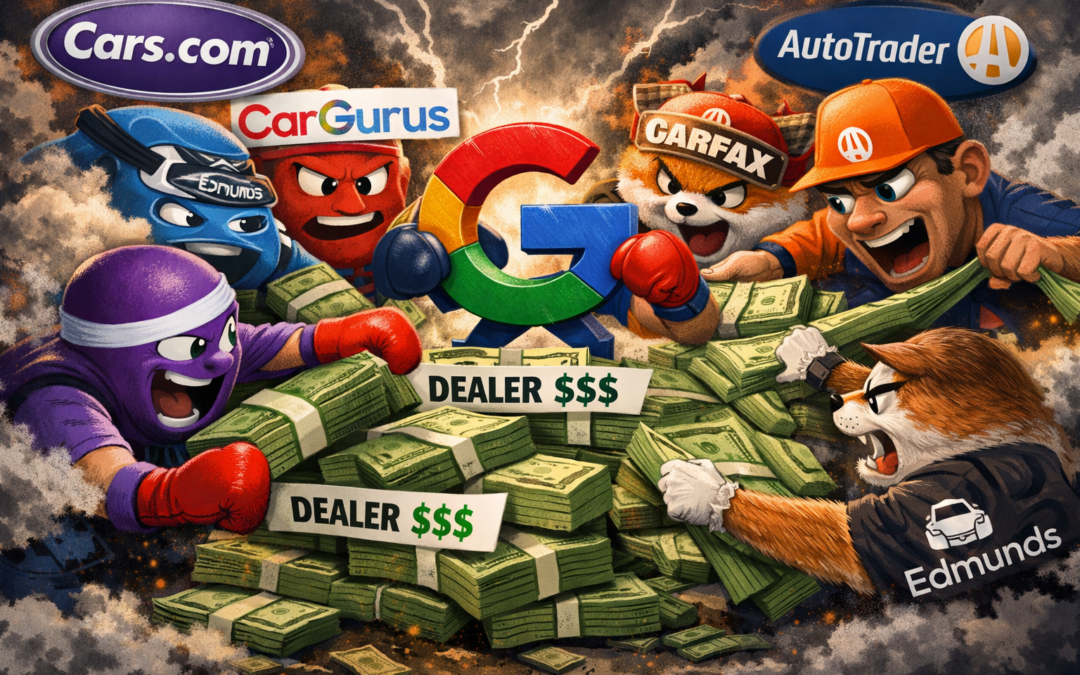
Having inventory visible online is still table stakes for reaching in-market shoppers. Third-party listing sites like AutoTrader, Cars.com, and CarGurus continue to play a major role—but their role has changed.
They’re no longer the strategy. They’re part of a much more complex ecosystem.
The Funnel Isn’t Linear Anymore—It’s a Battleground
The traditional funnel—top, middle, bottom—still exists, but it doesn’t behave cleanly anymore. Today’s car buyer moves fluidly between platforms, devices, and intent levels.
- Discovery (Top): Shoppers explore brands, models, and reviews on sites like Edmunds, OEM pages, and YouTube
- Consideration (Messy Middle): Google, third-party listings, and dealer sites all compete simultaneously
- Decision (Bottom): Dealer websites, VDP experience, and reputation close the deal
Google has extensively documented this “messy middle,” where shoppers loop between exploration and evaluation before making a decision.
The implication is simple:
You’re not guiding a journey—you’re competing in every step.
Google Is Now the Largest “Third-Party” Player
One of the biggest shifts since we last wrote about the value of 3rd party listings in 2024: Google has effectively become the most important third-party listing platform.
Search results for “cars for sale near me” now include:
- Aggregated inventory listings – Vehicle Listing Ads
- Dealer website inventory
- Third-party marketplaces
- Local pack results
This means third-party sites don’t just compete with you—they also compete within Google’s ecosystem, often side-by-side with your own inventory.
The Middle of the Funnel Is Where the Money Is Won (or Lost)
Most active shoppers spend the majority of their time in the consideration phase—comparing:
- Make, model, trim
- Price and payment
- Availability by location
This is where third-party listings deliver the most value. They aggregate inventory and capture high-intent shoppers.
But here’s the issue:
Visibility does not equal performance.
Different platforms bring:
- Different shopper behaviors
- Different price sensitivity
- Different close rates
And their audiences don’t fully overlap. Dropping one platform may mean losing access to a segment of buyers—but keeping all of them without scrutiny leads to wasted spend.
Dealers Don’t Need More Listings—They Need Better Allocation
Most dealerships already track ROI obsessively across their operations.
Third-party spend should be no different.
Instead of asking: “Should we be on this site?”
Ask:
- What is the cost per lead?
- What is the cost per sale?
- What is the gross per unit from this source?
- How does it impact inventory turn?
If a platform isn’t producing profit, it’s not a “visibility tool”—it’s a liability.
Third-Party Listings Are Rented Land
Third-party platforms are still critical for reach, especially in the middle of the funnel. But they come with trade-offs:
- Rising costs
- Limited control
- Competing inventory side-by-side
At the same time, your own website—when properly optimized—wins more lower-funnel searches like “dealership near me” and “buy [vehicle] near me.”
The strongest strategy today is not choosing one or the other—it’s balancing both.
The Bottom Line
Third-party listings still matter—but they’re no longer the advantage.
Execution is.
Dealers who win in 2026 are:
- Ruthless about third-party ROI
- Focused on conversion, not just traffic
- Investing in their own digital presence
Because visibility gets you in the game.
But performance is what actually sells cars.