

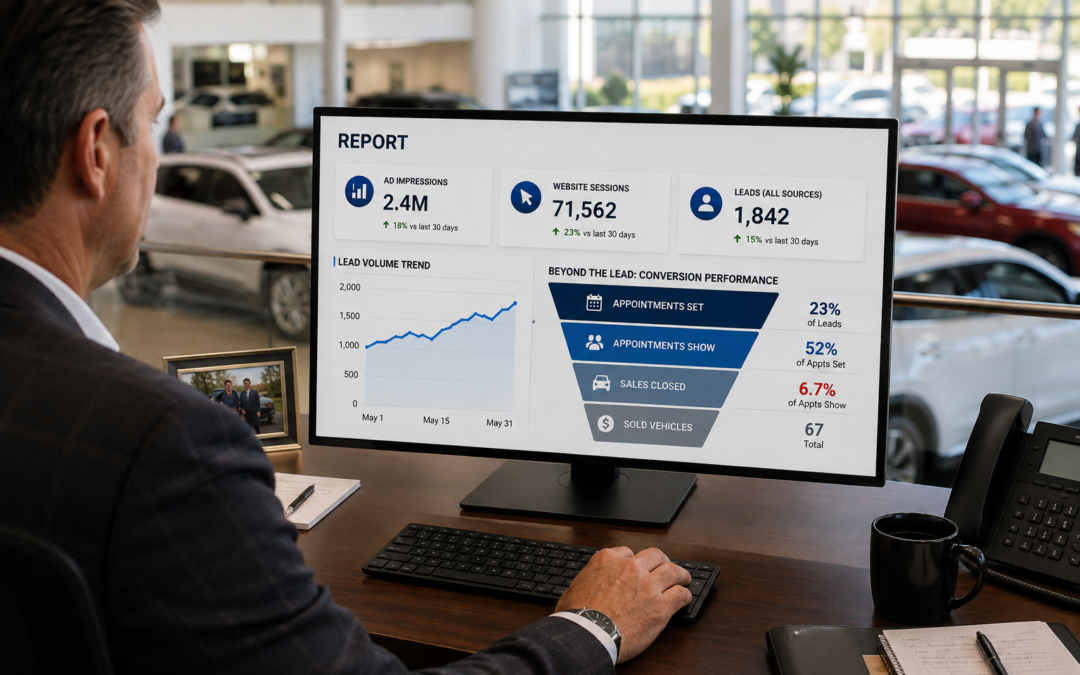
When vehicle sales slow down, many dealerships ask the same question:
Do we need more leads?
Sometimes the answer is yes.
But sometimes the real issue is what happens after the customer enters the funnel.
Advertising may be creating traffic. Shoppers may be viewing inventory. Leads may be entering the CRM. Yet sales still fall short of expectations.
When that happens, increasing the media budget can make the problem more expensive without solving it.
Start With the Customer Journey
A typical path might look like this:
Advertising → Website → VDP → Lead → Appointment → Showroom → Sale
If customers are dropping out at any point, the dealership needs to know where.
If traffic is weak, you may have a demand problem. That is where a properly structured automotive paid search strategy can help capture more qualified shoppers.
If shoppers reach the site but do not engage with inventory, you may have a website or merchandising problem.
We have previously looked at how dealership website experience impacts lead conversion.
If leads are coming in but appointments are not being set, you may have a lead-management problem.
If appointments are being made but customers are not showing or buying, the issue is farther down the sales process.
More traffic does not automatically fix a conversion problem.
Stop Looking at Cost Per Lead in Isolation
Cost Per Lead is useful, but it does not tell the whole story.
A cheap lead that receives poor follow-up has little value.
A more expensive lead that consistently turns into appointments and sales may be much more valuable.
Dealers should look beyond lead volume and ask:
- Are shoppers reaching the right inventory?
- Are VDPs getting meaningful engagement?
- Are leads being contacted quickly?
- Are appointments being set?
- Are appointments showing?
- Are shown customers buying?
Website behavior can also reveal intent that traditional lead reporting misses. In our analysis of
buyer intent hidden inside dealership website activity, high-engagement VDP audiences showed a strong relationship with showroom activity and sales.
The objective is not simply generating more leads.
The objective is selling more vehicles efficiently.
Marketing Has to Connect to Dealership Operations
Media performance should not be reviewed separately from inventory, website behavior, CRM activity and sales.
The advertising strategy has to match what the dealership actually needs to sell. That same principle is central to how
marketing, merchandising and dealership execution work together to improve inventory turn.
Website activity has to translate into shopping behavior.
Leads have to progress through the CRM.
And ultimately, the dealership has to convert that demand into retail sales.
That is why the better question is not:
How many leads did we get? It should be: Where are we losing the customer?
Before increasing your advertising budget, find that answer first.
Because spending more money to put additional customers into a broken funnel rarely fixes the funnel.